A Letter from Amsterdam
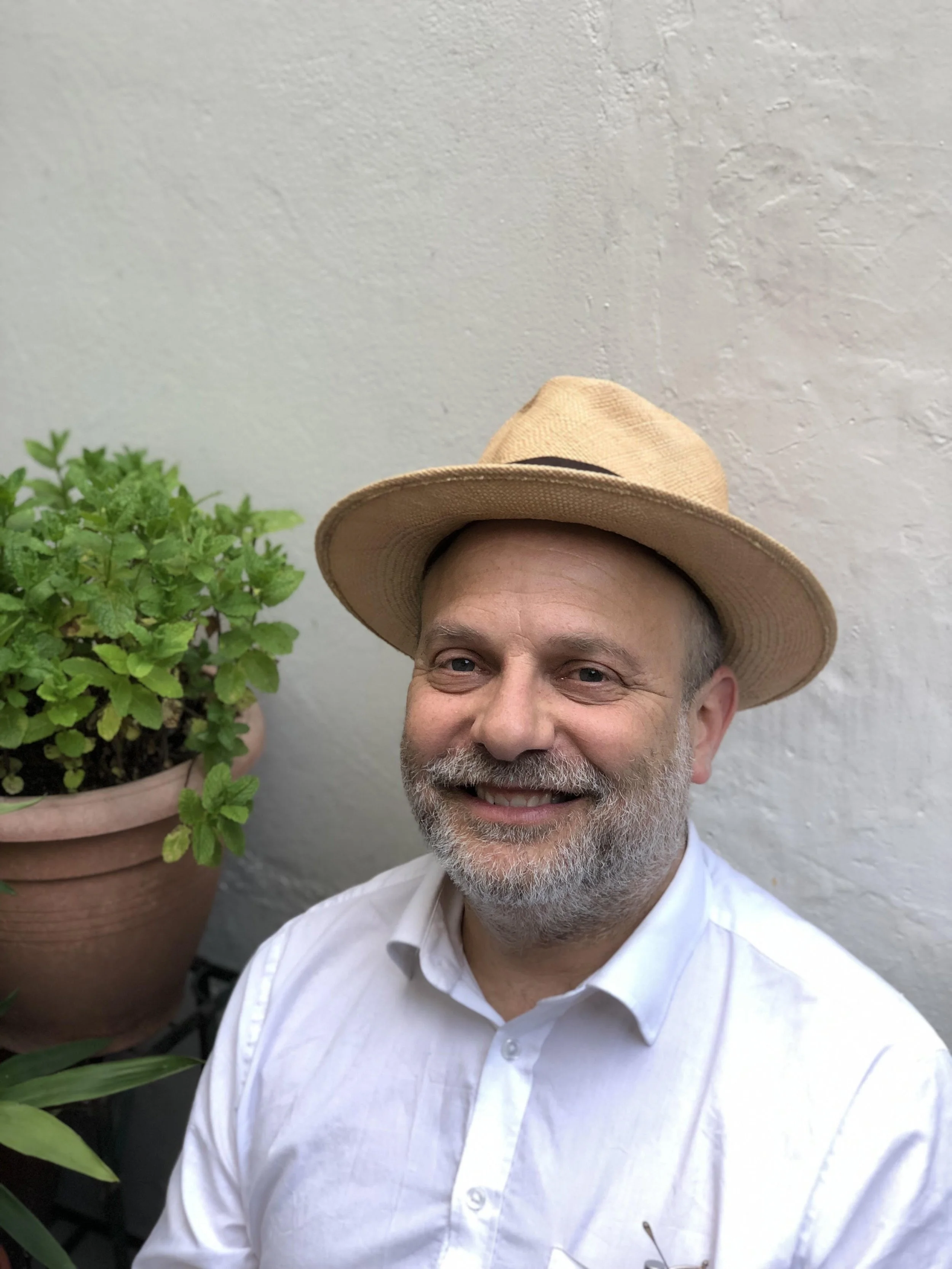
Jonathan Gill is an old friend of mine. He was a journalist, writing for the New York Times in Charleston, West Virginia. He wrote, “Harlem: The Four Hundred Year History from Dutch Village to Capital of Black America,” and “Hollywood Double Agent.” He is currently teaching humanities at Amsterdam University College. These are professional details. What is important can be found below.
[Rabbi Hollander]
Letter from Amsterdam
I have been living in Amsterdam for some time now. It’s a long, interesting story–and hopefully it will be of interest to you and your fellow Nisterites as you experiment with creating a new/old kind of Jewish community. Maybe the example of Amsterdam, where there’s actually a street called New New Street and one called Old New Street, but none called Old Old Street or New Old Street, is instructive.
My experience as a Jew in “Mokum Aleph,” as Amsterdam used to be known among Jews, who borrowed the word from the Hebrew for “place” and made it part of the local Yiddish dialect called Bargoens–Rotterdam was “Mokum R,” Haarlem was “Mokum H,”etc.--isn’t typical, for a number of reasons. Perhaps the most important is that I didn’t grow up here, but in America. Also, it’s only in recent years that my Dutch has approached what others call fluent. It still doesn’t feel that way to me.
When people ask me what it’s like to be a Jew in Amsterdam, I often explain that it’s like living in a graveyard. That’s cruel, especially given the variety and liveliness–albeit small scale–of Jewish life that I’ve found here, but it’s also true.
The biggest difference between Dutch Jews and American Jews, and I make this judgement based on decades of living here, experiencing every kind of Jewish life and identity and practice here, from orthodox to progressive to none at all, is that all Dutch Jews, even the very young ones, carry the heavy burden of The War. While to an American “the war” might refer to Vietnam, in the Netherlands, there is only one war, and it has never ended. Most American Jews don’t have that burden, or they carry it differently. That was one thing that my wife and I wanted to give to our two children growing up Jewish in the Netherlands: That there had to be more to being Jewish than The War. I often thought it was much like the ways in which African Americans–all Americans, to be honest–are marked by the history of slavery and its aftermath, whereas Dutch people of African descent have a more liberated frame of reference, more choices, more opportunities.
Ever since meeting Eveline in Israel in 1990–my parents loved to joke: “You went to Israel and found the only non-Jewish woman in the whole country!”--we visited Amsterdam once or twice a year. I had no religious friends here at the time and I didn’t speak much Dutch, so I was lost at first when it came to finding a shul on these visits. There were more synagogues in our neighborhood of the Upper West Side of Manhattan than in all of the Netherlands! In fact, I wonder why I was even looking for a shul. I was raised ultra-Reform and hadn’t been to services since I became bar mitzvah. Now I know that being married to someone who wasn’t Jewish, or who wasn’t yet Jewish, did wonders for my Jewishness. It was now a choice, and it was a choice I gladly made.
I found Amsterdam’s Liberaal synagogue on-line, thinking it might be the equivalent of the Reform in America. It was really more like an American-style Conservative, so it was a real shock for someone whose rabbi back in the 1970s didn’t even wear a kippah during services! But the piano and mixed gender choir were familiar enough.
I remember going to Saturday services during our summer holiday one year and there were only a few elderly couples in the vast hall. That was deeply disturbing, but when I went back to the next week it was full: Their summer holiday had come to an end and things were back to normal. Lesson learned: There are different kinds of difference.
Once we moved here in 2005, we wanted to become members and send the children to “Talmoed Torah,” but again, that proved more difficult than I anticipated. First I needed to provide evidence of my Jewish background in the form of my parents’ ketubah. My father, who is not only not observant, but who has his doubts about religion in general, was surprised. He had lost track of the document decades before, thinking that no one would ever ask him for proof of his children' s membership in a tribe that hardly anyone wanted to join.
That level of commitment required by the Liberaal shul turned out to be a pattern: If we wanted to formally join as a family, not only did I need to have proof of my Judaism, but Eveline and the children would have to convert, which meant two years of classes for both of us, and an appearance before a beit din and a visit to a mikveh. When my father heard that he went from surprised to shocked. I didn’t learn much in the classes, but we did get to know a couple (a Dutch woman and a kibbutznik) who became close friends. Perhaps that was the intention all along.
In terms of the actual experience, I wasn’t much inspired by the way they did things. The services seemed so rote, resembling those of the “temple” in which I was raised–it felt very much like a church, which was of course the reason the Reform movement got started in the first place. The children found Hebrew school beyond boring, which had also been my experience way back when, so I was satisfied. I didn’t yet have the sense that I could take more responsibility for the kind of Judaism they would inherit from me. That’s the thing about momentum: You are moving but not changing.
I longed for a more authentic, deeper connection with the texts and the traditions.
So we didn’t stay members of the shul after our second son became bar mitzvah, but I don’t regret the experience. It gave me an on-ramp into Dutch Jewish culture that was invaluable. In that way, it’s a bit like therapy–Freud said that great psychoanalysis requires great patients, and I’ve found that my experience in Jewish settings usually has more to do with me than the setting. There’s always something to learn, always a way to grow.
I once observed to a trans woman I met at the Liberaal shul that she was typically Dutch, to which she replied: “Jonathan, I’m not typical anything!” My friend may have reached a core truth, or better put, a core question, about being Jewish: What does typically Jewish mean? What did it ever mean? What will it mean? And what’s my role in that?
Jonathan Gill